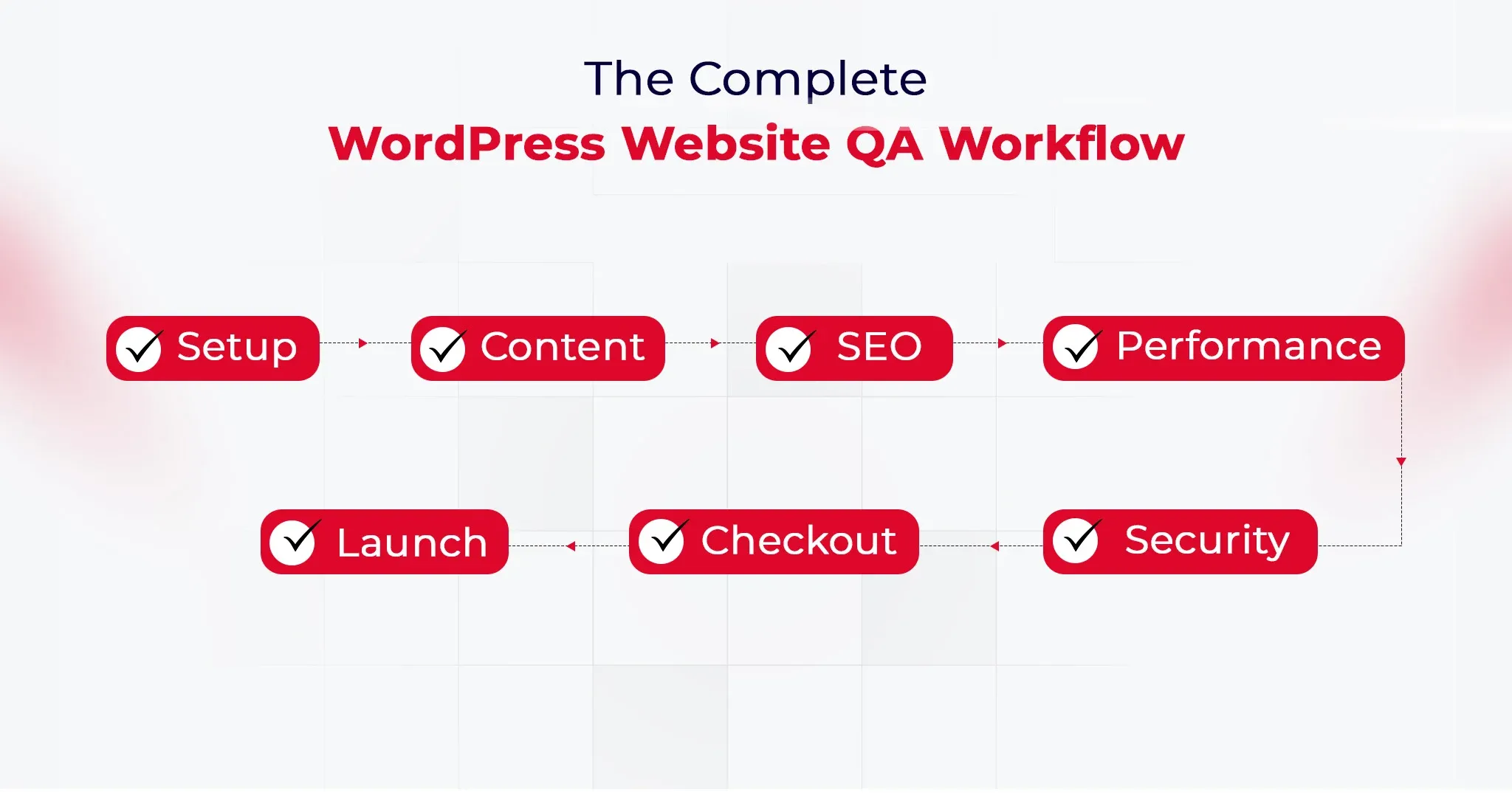
#1. WordPress Core Configuration
Configure site title, tagline, timezone, language, and permalink structure. Ensure canonical URLs and preferred domain formats are correctly set to avoid duplication. Validate reading settings, homepage display, and indexing visibility before going live.
Why does this matter?
Incorrect configurations can create SEO conflicts and tracking inconsistencies. A strong WordPress QA checklist ensures a clean and stable technical foundation.
#2. Essential Plugins
Install and validate plugins for security, backups, SEO, caching, and performance. Remove unused or outdated plugins and verify compatibility between active plugins and themes. Ensure plugin updates do not break existing functionality.
Why does this matter?
Plugin conflicts are one of the most common causes of failures. Website QA testing services focus on compatibility to maintain stability.
#3. Content Readiness
Review all core pages including homepage, about, contact, and policy pages for accuracy and completeness. Check formatting, internal linking, media rendering, and CTA placements across devices. Ensure there is no placeholder or duplicate content.
Why does this matter?
Incomplete or inconsistent content reduces credibility and engagement. WordPress QA services ensure your site is ready for real users.
#4. SEO and Analytics
Set up GA4, Google Search Console, XML sitemap, and robots.txt configuration. Validate meta tags, schema markup, and canonical tags to ensure proper indexing. Test event tracking and goal configurations for accurate reporting. These checks form the foundation of effective technical WordPress SEO.
Why does this matter?
Without proper tracking and indexing, performance cannot be measured. A WooCommerce site testing checklist often overlaps here to support growth tracking.
#5. Performance Optimization
Optimize images using WebP, enable caching, and configure CDN delivery. Minify CSS and JavaScript files and test Core Web Vitals across devices. Monitor server response time and eliminate render-blocking resources.
Why does this matter?
Slow performance directly impacts SEO and conversions. Investing in WordPress performance optimization before launch helps improve Core Web Vitals and user experience.
#6. Security Hardening
Enforce HTTPS across the site and configure firewall and login protection. Disable unused endpoints like XML-RPC and validate file permissions. Ensure admin access and roles are properly restricted.
Why does this matter?
Security gaps can lead to data breaches or downtime. WordPress security services ensure your website is protected from common vulnerabilities.
#7. Mobile Responsiveness and Cross-Browser Testing Test layouts, navigation, and interactive elements across mobile, tablet, and desktop. Validate compatibility on browsers like Chrome, Safari, and Firefox. Ensure consistent UI behavior and touch responsiveness.
Why does this matter?
A broken experience on any device leads to immediate drop-offs. A complete WordPress QA checklist ensures consistency across platforms.
#8. Forms and Lead Capture Validation
Test all forms for submission accuracy, email triggers, and backend storage. Validate spam protection and integrations with CRM or email marketing tools. Ensure error handling works correctly.
Why does this matter?
Broken forms result in lost leads without visibility. Website QA testing services ensure data capture works reliably.
#9. Broken Links and 404 Handling
Scan for broken internal and external links and resolve redirects. Configure a custom 404 page that guides users back to relevant sections. Validate navigation paths across the website.
Why does this matter?
Broken links negatively impact SEO and user experience. WordPress QA services ensure smooth navigation and proper indexing.
#10. Accessibility and Compliance
Validate accessibility basics such as alt text, keyboard navigation, and contrast ratios. Ensure GDPR compliance through cookie consent and privacy policy visibility. Test usability for assistive technologies.
Why does this matter?
Accessibility improves usability and reduces compliance risks. Website QA testing services increasingly include these checks.