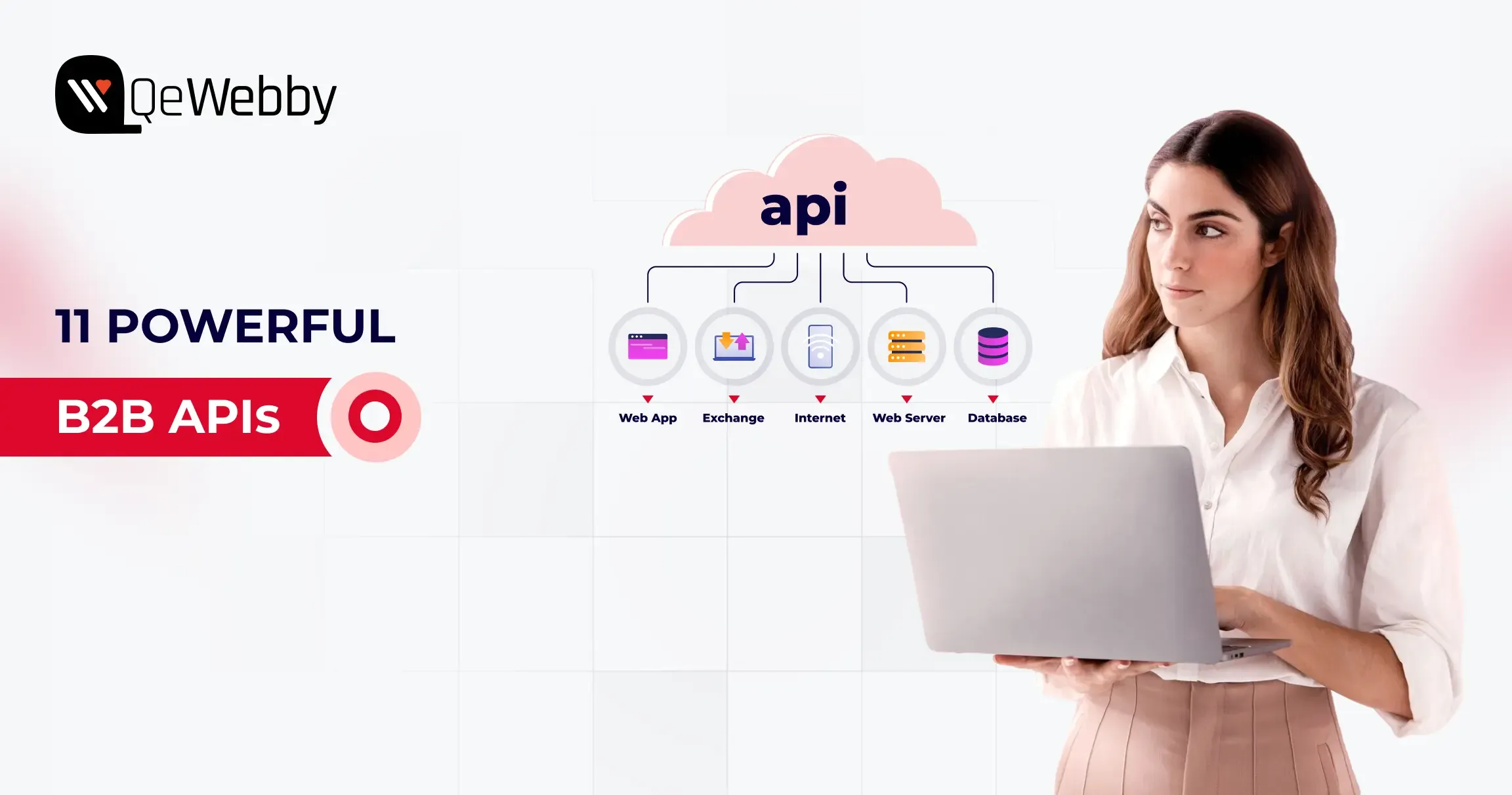
With millions of APIs available, finding the right ones for your B2B projects can feel overwhelming. The goal is to select tools that enhance your B2B API integration capabilities and streamline everything from supply chains to customer communication. A well-chosen API integration platform can transform your operations.
Here are some of the best options,
1. Salesforce API for Streamlined CRM Operations
The Salesforce API is the best CRM API for B2B companies looking to consolidate customer relationship information across connected systems. By connecting Salesforce with your other business applications, you can build a single, unified view of all customer interactions. This integration helps all your sales, marketing, and support organizations work from the same current information.
Key Features:
- Unified customer data across systems
- Real-time data synchronization
- Programmatic access to CRM analytics
- Workflow automation
- Extensive data migration
When to Integrate:
- eCommerce checkout address validation
- On-demand delivery apps
- Travel, hospitality, or multi-location directories
- Real estate or property mapping platforms
2. Stripe API for Seamless Payment Processing
Including the Stripe API in your B2B platform makes it really easy to process payments. Stripe is built to handle complex payment scenarios, making it ideal for companies with recurring subscriptions, marketplace payouts, or high-volume transactions. Using its powerful API, you can include payment gateways directly within your applications.
Key Features:
- Secure card payments (Apple Pay, Google Pay, etc.)
- Recurring subscriptions and invoicing
- Real-time payout tracking
- Fraud prevention and compliance tools
- Multi-currency and international support
When to Integrate:
- eCommerce stores and marketplaces
- SaaS subscription platforms
- Mobile apps requiring in-app purchases
- Donation or fundraising portals
3. Twilio API for Advanced Communication Solutions
The Twilio API provides a comprehensive set of tools for integrating communication capabilities into your applications. To send automated SMS messages, handle voice calls, or add video chat, Twilio gives you the building blocks to reach users in real time. This is what business departments must have today to communicate with customers and trading partners instantly.
Key Features:
- SMS, MMS, and voice call automation
- Phone number masking
- Global phone verification
- Video and chat integrations
- Real-time status tracking
When to Integrate:
- Account signup verification (OTP)
- Customer service chatbots
- Marketing campaigns via SMS
- Telemedicine/video appointment platforms
4. DocuSign API for Secure Document Management
The DocuSign API is essential for companies that want to automate and secure document management processes. It enables you to add electronic signature functionality directly within your own apps, simplifying processes that have long required manual printing, signing, and scanning.
Key Features:
- Seamless integration with the existing system
- Secure authentication through OAuth 2.0
- Compliance with global eSignature laws
When to Integrate:
- Automated order or signup confirmations
- Newsletter distribution
- Password reset/notification workflows
- Application status updates
5. AWS API for Cloud Infrastructure
The Amazon Web Services (AWS) API is a core B2B API integration, offering cloud infrastructure services and improved data control. Rather than having to manually set up servers, databases, or storage, your applications can leverage the AWS API to provision and manage these resources automatically. This is critical to creating scalable, high-availability B2B applications. This robust B2B API integration enables your systems to dynamically respond to shifting demands in real time.
Key Features:
- Fully-managed services for API management
- Offers API Gateway Pattern
- Automates the process of app integration with third-party services
When to Integrate:
- Instant messaging apps
- Real-time user dashboards
- Multi-user collaboration platforms
- Event-driven content
6. HubSpot API for Powerful Marketing Automation
The HubSpot API is among the greatest CRM APIs for B2B companies with marketing automation. It enables you to sync customer data across all your tools. It allows seamless data flows between your CRM, email marketing tool, and website, and offers a single view of your marketing and sales funnel.
Key Features:
- Lead/enquiry syncing
- Campaign automation
- CRM and content integration
- Analytics endpoints
When to Integrate:
- To streamline marketing, CRM, and sales handoffs
- Automating end-to-end customer journeys
- Generating robust marketing analytics
7. Microsoft Graph API for Connected Workflows
The Microsoft Graph API is one gateway to data and intelligence throughout the Microsoft 365 solution. It includes services such as Outlook, Teams, OneDrive, and SharePoint. You can use this API to develop robust application integration solutions that connect business departments and simplify their everyday processes. This B2B API integration simplifies complex business processes spanning multiple applications.
Key Features:
- Cross-app file and calendar automation
- Task and message triggers
- Unified identity/authentication
When to Integrate:
- Collaborative document sharing/editing
- Automated notifications across teams
- Task tracking and reporting
8. QuickBooks API for Efficient Accounting Integration
For any B2B business, seamless accounting integration is not optional, and the QuickBooks API offers a one-way ticket to get there. The API lets your applications talk directly to QuickBooks, automatically exchanging financial information and removing manual data entry between your sales, invoicing, and accounting systems.
Key Features:
- Invoice/expense syncing
- Real-time payment updates
- Comprehensive reporting
When to Integrate:
- Automated order-to-cash workflows
- Invoice management in eCommerce
- Financial reporting for B2B projects
9. Slack API for Real-Time Team Collaboration
The Slack API makes your workspace a unified team collaboration center by bringing together notifications and tools in one location. Coupling third-party APIs with an environment such as Slack enables your team to get real-time updates from applications such as project management software, CRM software, and code repositories without ever leaving their main communication channel.
Key Features:
- Custom notifications
- Bot automation
- Third-party integrations
- Message/search endpoints
When to Integrate:
- For instant notifications from business apps
- Real-time project status updates
- Automated alerts for support issues
10. Google Maps API for Location-Based Services
Google Maps API is one of the key B2B API integration tools that support businesses through location-based services. It helps you map custom data, calculate logistics routes, and find the closest points of interest. This B2B API integration is used across B2B platforms, particularly in logistics and retail operations.
Key Features:
- Map and address embedding
- Geocoding, routing
- Places info and search
- Live traffic data
When to Integrate:
- Delivery, logistics, or fleet solutions
- Real estate or local business directories
- eCommerce store locators
11. Shopify API for eCommerce Management
The Shopify API enables you to integrate your Shopify store with other essential business systems, including your ERP, warehouse management system, and marketing platforms. This automates key processes and gives you a single, unified view of your entire operation. When selecting a B2B API integration platform, choose one that supports the multifaceted processes of eCommerce.
Key Features:
- Product/inventory updates
- Order processing
- Customer and sales analytics
- Integration hooks
When to Integrate:
- B2B/B2C commerce platforms
- Businesses expanding into online retail
- Synchronizing eCommerce with back-end systems